
2rf Solutions for ETICS
Social networks
Contact

Quinta de Santo Estevão,

Rua da Gândara, Abraveses  

3515-149 - Viseu

(call to national fixed network)

Profiles and Trimmings

Profiles and trims for ETICS systems

Starter, corner and drip profiles, expansion joints and technical profiles for protecting and finishing the system's singular points. Aluminium and PVC solutions for new construction and refurbishment.

Profiles and Trimmings

Profiles and trims for ETICS systems

Start, corner and drip profiles, expansion joints and technical profiles for protecting and finishing the system's singular points.

Aluminium and PVC solutions for new construction and refurbishment.

ETAG 004 compliance and CE marking on all references in the range. Datasheets and catalogue available for download.

Function in the ETICS system

Specification and application of profiles at singular points

The profiles provide mechanical protection, sealing and finishing at the ETICS system's unique points: the base of the insulation, edges, window and door openings, expansion joints and transitions between materials.

Correct selection and application prevents the most common pathologies in these areas.

Selection criteria: position, material and display

The profiles are applied to the singular points before the insulating boards are coated, glued with coating mortar. They must not be fixed with dowels or nails. At the edges and contours of gaps, the profile is pressed against the insulating board until the mortar flows back through the holes in the profile. There must be no overlap between adjacent profiles.

Specifying the type of profile, the material (aluminium or PVC) and the range depends on the position on the façade, the type of support and the level of exposure of the singular point. At the corners of window and door openings, diagonal reinforcement of 200×300 mm at 45° is recommended, applied before the standard mesh.

2rf profile range

Profiles for all positions and application conditions

Aluminium and PVC profiles for starting, edge protection, water drainage in gaps, movement absorption in joints and finishing connections to window frames. ETAG 004 compliance and CE marking on all references.

Eco, standard, plus and premium ranges

Solutions for different levels of technical demand

Compatible with current ETICS systems

Suitable for systems certified on the Portuguese market

Aluminium (0.6 and 0.8 mm) and PVC

Selection by mechanical requirement and exposure condition

Profile application

Installation procedure at different points on the façade

The profiles are glued to the insulating board with coating mortar, pressed against the surface until the mortar flows back through the holes in the profile. No dowels or nails are used for fixing. There must be no overlap between adjacent profiles.

When starting out, the profile is fixed to the support at a minimum level of 15 cm above the finished floor, with spacing of 2 to 3 mm between profiles for thermal expansion. At the edges of gaps and edges, the application is made before the reinforced bus, with a minimum overlap of 10 cm between the profile mesh and the base layer mesh.

Types of ETICS Profiles

Selection by type and application condition

The 2rf range includes profiles for starting, edge protection, drainage in gaps, movement absorption in joints and finishing in frame connections. Aluminium and PVC, with solutions for new construction and refurbishment.

Download PDF Profile Catalogue
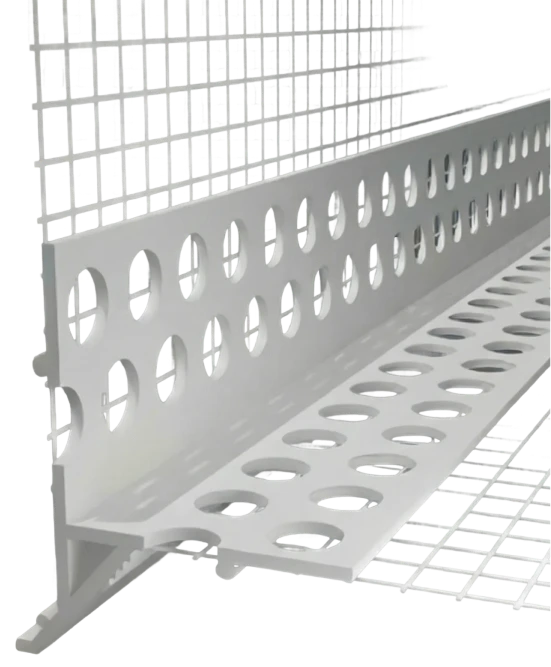
Starter profiles and accessories

Starter profiles and accessories

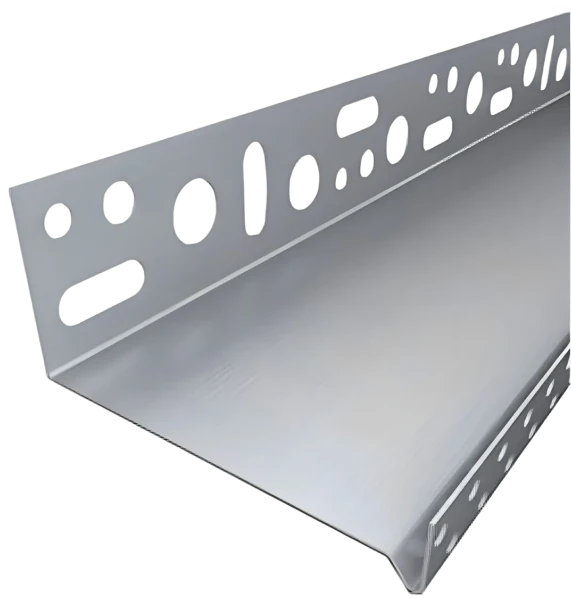
Levelling and protection of the insulation base against rising damp and mechanical action.

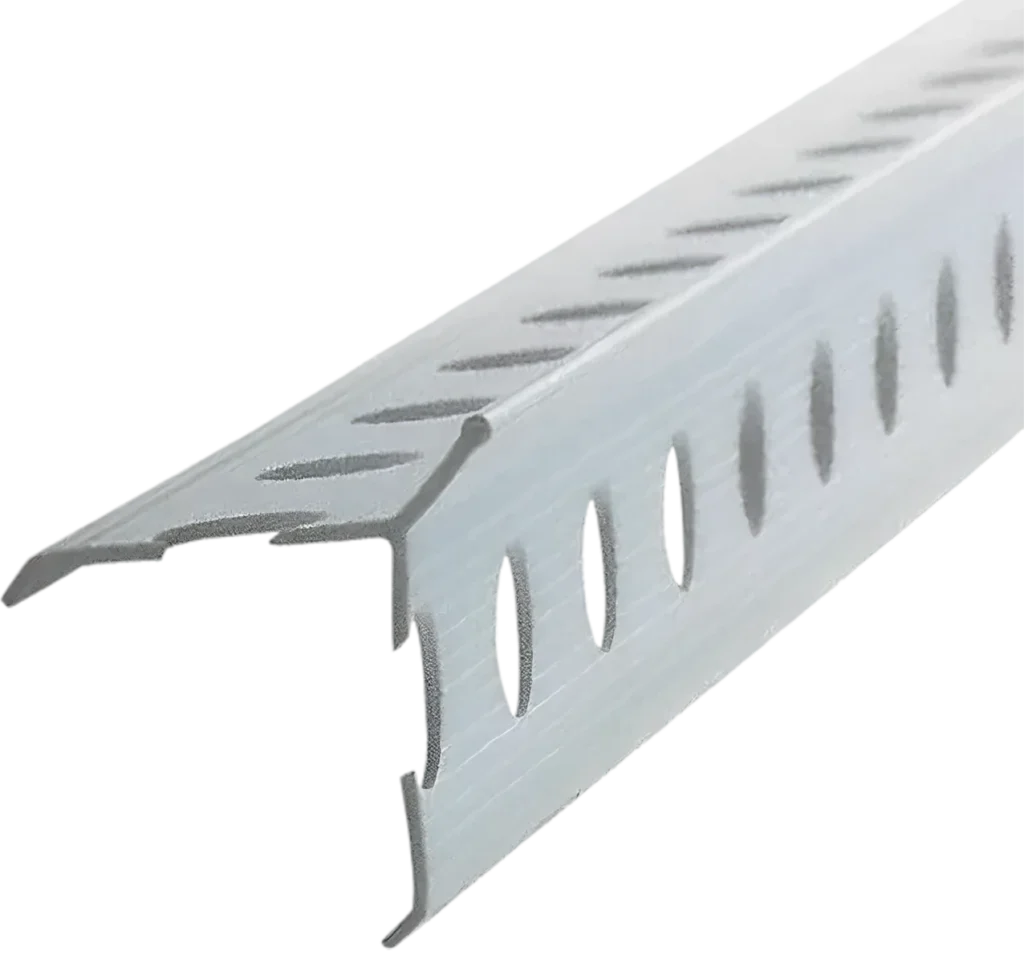
They define the starting level of the system (at least 15 cm above the finished floor). Fixing to the support with a maximum spacing of 30 cm. 2 to 3 mm spacing between adjacent profiles for thermal expansion. Available in aluminium and PVC, with widths from 20 to 200 mm.

Includes: starter profiles, connectors, spacers and fixings. 

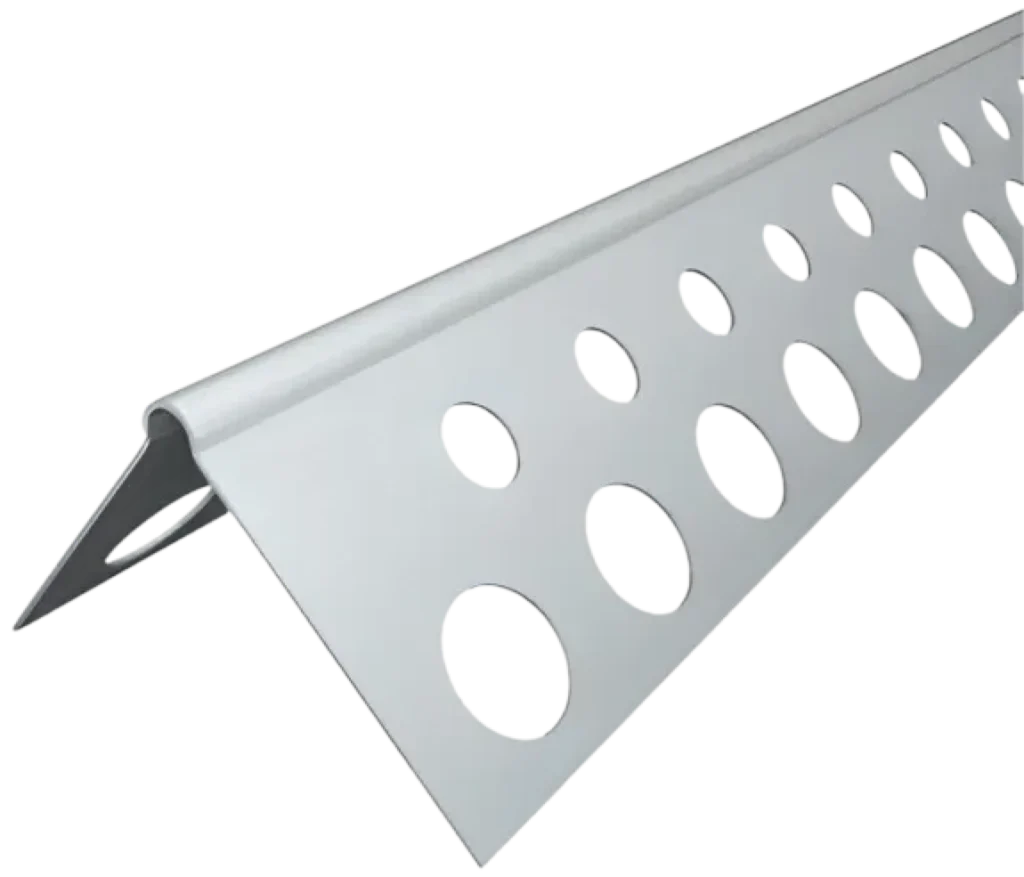
Corner profiles with mesh

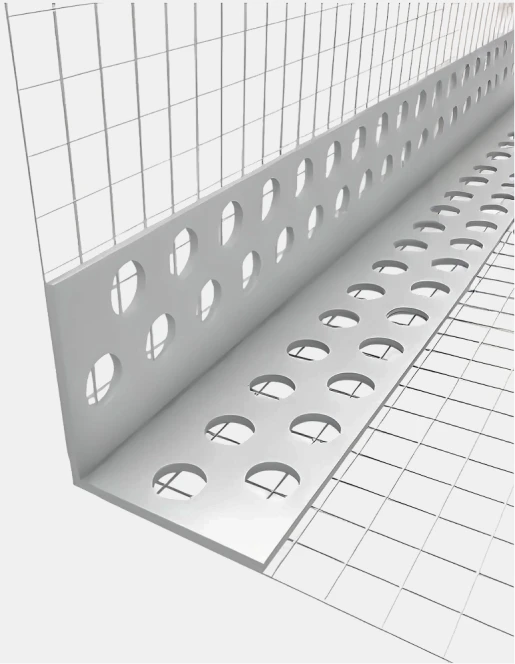
Protection of edges against mechanical impact and reinforcement of the transition zone between façade planes.

Glued to the insulating board with coating mortar, without mechanical fixing. The embedded glass fibre mesh is integrated into the reinforced base layer, reinforcing the edge. Diagonal reinforcement of 200×300 mm at 45° is recommended at the corners of spans.

Available in PVC with 10×10 cm and 10×15 cm nets. 

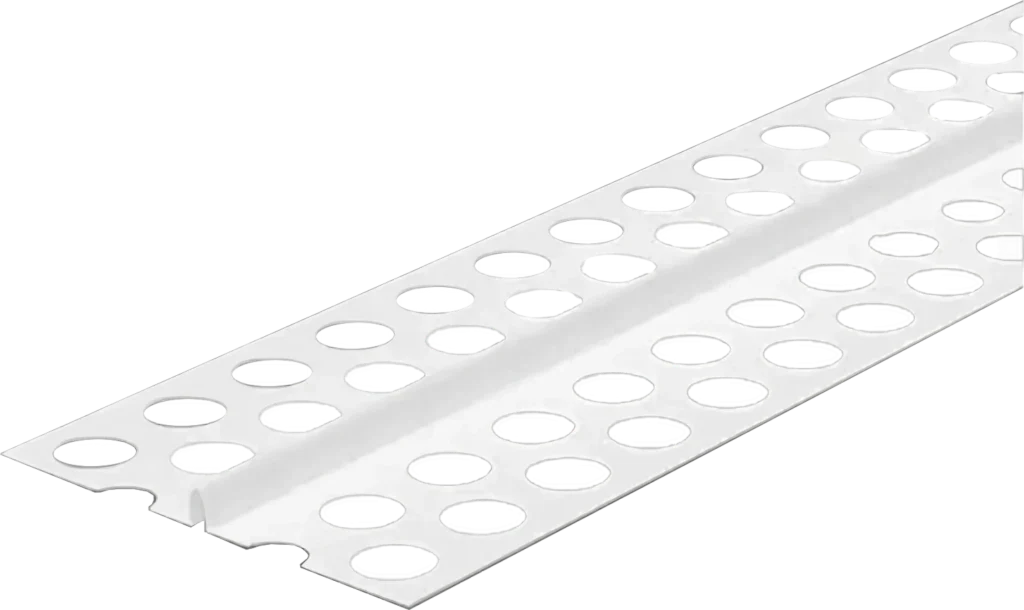
Expansion joint profiles

Absorption of structural and thermal movements without transferring tensions to the ETICS system.

Composed of side flaps with fibreglass mesh and a deformable central membrane resistant to UV rays. Existing joints in the façade must be respected and never covered by the insulation boards. Mandatory on façades longer than 8 linear metres and at transitions between building bodies.

Available for joints from 5 to 25 mm wide, in flat and corner versions. 

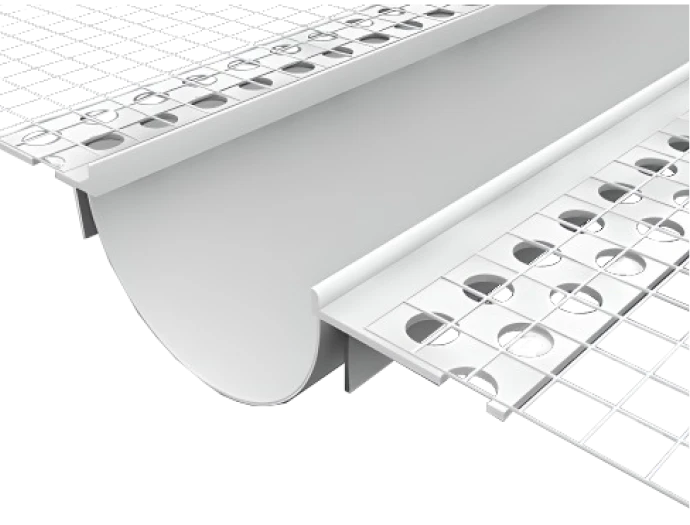
Drip profiles

Protection of upper spans against water running down the surface of the cladding.

The integrated drip stops the water sheeting, preventing staining and degradation of the finish in the areas adjacent to the gaps. The built-in fibreglass mesh integrates the profile into the system's base layer. Visible and concealed drip edge options depending on the desired finish.

Available in standard and premium versions, with variations in the size of the net. 

Technical profiles

Connections to window frames, sill finishes, transitions to roofs and encounters with other coverings.

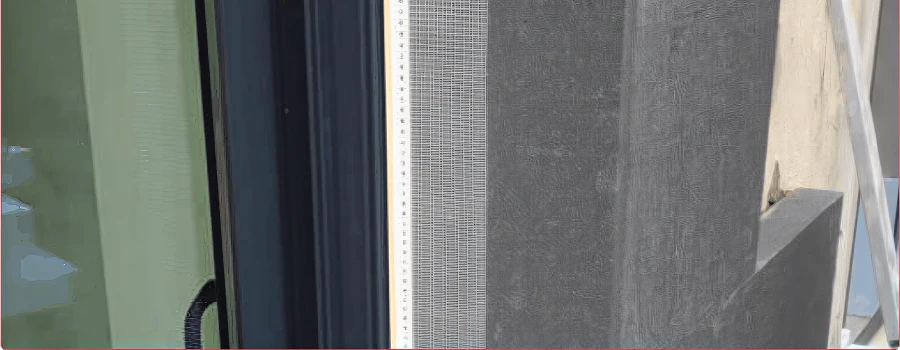
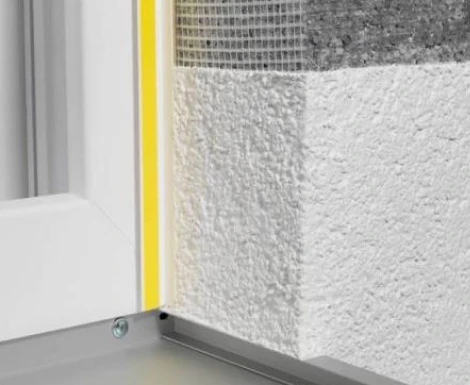
Window profiles for connecting the ETICS system to frames. Sill profiles with adhesive component for joining sills and insulation. Profiles for arches, recessed joint profiles for decorative details and profiles for separating types of finish.

Dimensions and configurations vary according to reference.

Simple profiles

Profiles without built-in mesh for complementary applications and finishing touches.


Aluminium and PVC profiles for situations that do not require reinforcement. Used for aesthetic finishing or light protection. Includes aluminium angles to reinforce edges in more mechanically demanding situations.

Dimensions as per reference.

Various profiles

Profiling accessories to complement the main families.

Connectors between starter profiles, spacers for thickness adjustment, fixing clips and finishing elements for specific situations. Necessary accessories for correct installation and connection between adjacent profiles.

Starter profiles and accessories

Starter profiles and accessories

Levelling and protection of the insulation base against rising damp and mechanical action.

They define the starting level of the system (at least 15 cm above the finished floor). Fixing to the support with a maximum spacing of 30 cm. 2 to 3 mm spacing between adjacent profiles for thermal expansion. Available in aluminium and PVC, with widths from 20 to 200 mm.

Includes: starter profiles, connectors, spacers and fixings. 

Corner profiles with mesh

Protection of edges against mechanical impact and reinforcement of the transition zone between façade planes.

Glued to the insulating board with coating mortar, without mechanical fixing. The embedded glass fibre mesh is integrated into the reinforced base layer, reinforcing the edge. Diagonal reinforcement of 200×300 mm at 45° is recommended at the corners of spans.

Available in PVC with 10×10 cm and 10×15 cm nets. 

Expansion joint profiles

Absorption of structural and thermal movements without transferring tensions to the ETICS system.

Composed of side flaps with fibreglass mesh and a deformable central membrane resistant to UV rays. Existing joints in the façade must be respected and never covered by the insulation boards. Mandatory on façades longer than 8 metres and at transitions between building bodies.

Available for joints from 5 to 25 mm wide, in flat and corner versions. 

Drip profiles

Protection of upper spans against water running down the surface of the cladding.

The integrated drip stops the water sheeting, preventing staining and degradation of the finish in the areas adjacent to the gaps. The built-in fibreglass mesh integrates the profile into the system's base layer. Visible and concealed drip edge options depending on the desired finish.

Available in standard and premium versions, with variations in the size of the net. 

Technical profiles

Connections to window frames, sill finishes, transitions to roofs and encounters with other coverings.

Window profiles for connecting the ETICS system to frames. Sill profiles with adhesive component for joining sills and insulation. Profiles for arches, recessed joint profiles for decorative details and profiles for separating types of finish.

Dimensions and configurations vary according to reference.

Simple profiles

Profiles without built-in mesh for complementary applications and finishing touches.


Aluminium and PVC profiles for situations that do not require reinforcement. Used for aesthetic finishing or light protection. Includes aluminium angles to reinforce edges in more mechanically demanding situations.

Dimensions as per reference.

Various profiles

Profiling accessories to complement the main families.

Connectors between starter profiles, spacers for thickness adjustment, fixing clips and finishing elements for specific situations. Necessary accessories for correct installation and connection between adjacent profiles.

Construction details

Application specifications per façade area

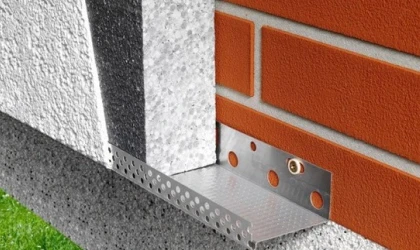
Facade start-up

Profile fixed to the support at a minimum height of 15 cm above the finished floor. Fixing at a maximum spacing of 30 cm. 2 to 3 mm joints between adjacent profiles for thermal expansion.
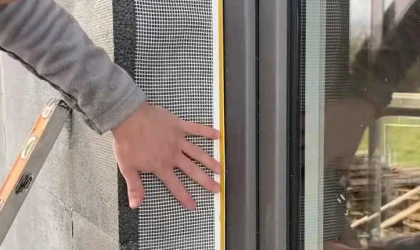
Span contours

Diagonal reinforcement of 200×300 mm at 45° at the corners of windows and doors, applied before the standard mesh. At the ends with frames and sills, provide a joint of at least 5 mm for elastic sealant.
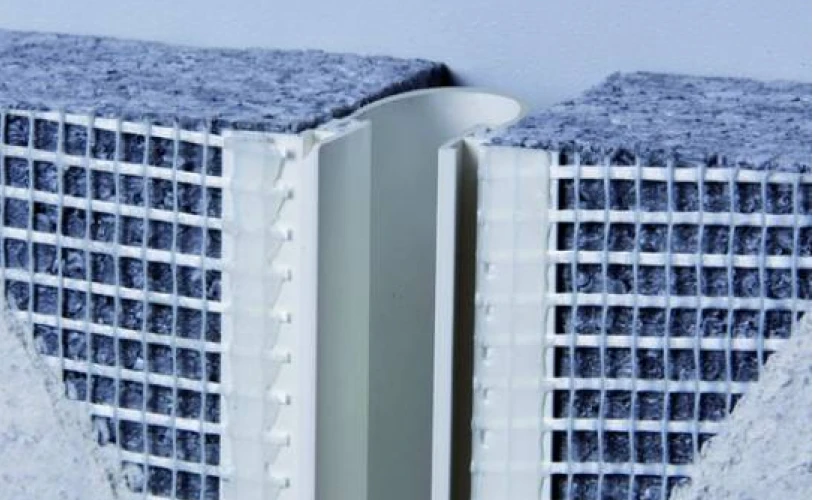
Expansion joints

Mandatory on façades longer than 8 linear metres, at transitions between building bodies and over existing structural joints. Facade joints must never be covered by the insulating boards.

Related categories

Other components for the insulation system

The profiles protect the façade's transition points.

These components ensure that the system is fixed, reinforced and watertight.

ETICS bushes

Fastening and Anchoring

Fibreglass nets

Frame and reinforcement

Fixings

General Fixings and Tapit

Frequently Asked Questions

Technical questions about ETICS profiles

01    What is the difference between aluminium and PVC starter profiles?

Aluminium profiles offer greater rigidity and mechanical resistance and are ideal for more demanding or exposed situations. PVC profiles are more flexible, adapt better to irregularities in the substrate and are a more economical option. Both fulfil the function of protecting the base of the insulation.

The width of the starter profile must correspond to the thickness of the thermal insulation used. For 60 mm EPS, a 60 mm starter profile is used. The range available goes from 20 to 200 mm to cover all common thicknesses.

Mesh corner profiles are not compulsory in all systems, but are strongly recommended. They protect the edges against mechanical impact and ensure a uniform finish. They should be glued to the insulating board with coating mortar, without mechanical fixing. Diagonal reinforcement of 200×300 mm at 45° is recommended at the corners of spans.

Expansion joints are necessary on façades longer than 8 linear metres, at transitions between different building bodies, over existing structural joints and when the façade changes orientation. Existing joints in the façade must never be covered by the insulating boards.

The profiles are compatible with current ETICS systems on the Portuguese market. We recommend checking the system owner's specifications to confirm compatibility and the specific requirements of each project.

Looking for components for your project?

The 2rfpro.pt online shop offers a complete catalogue of profiles, bushes, nets and accessories, with detailed technical information and delivery within 24 hours. For larger projects or specific technical specifications, the sales team is available for dedicated support.