Quinta de Santo Estevão,
Rua da Gândara, Abraveses
3515-149 - Viseu
Tel: 232 459 087
(call to national fixed network)
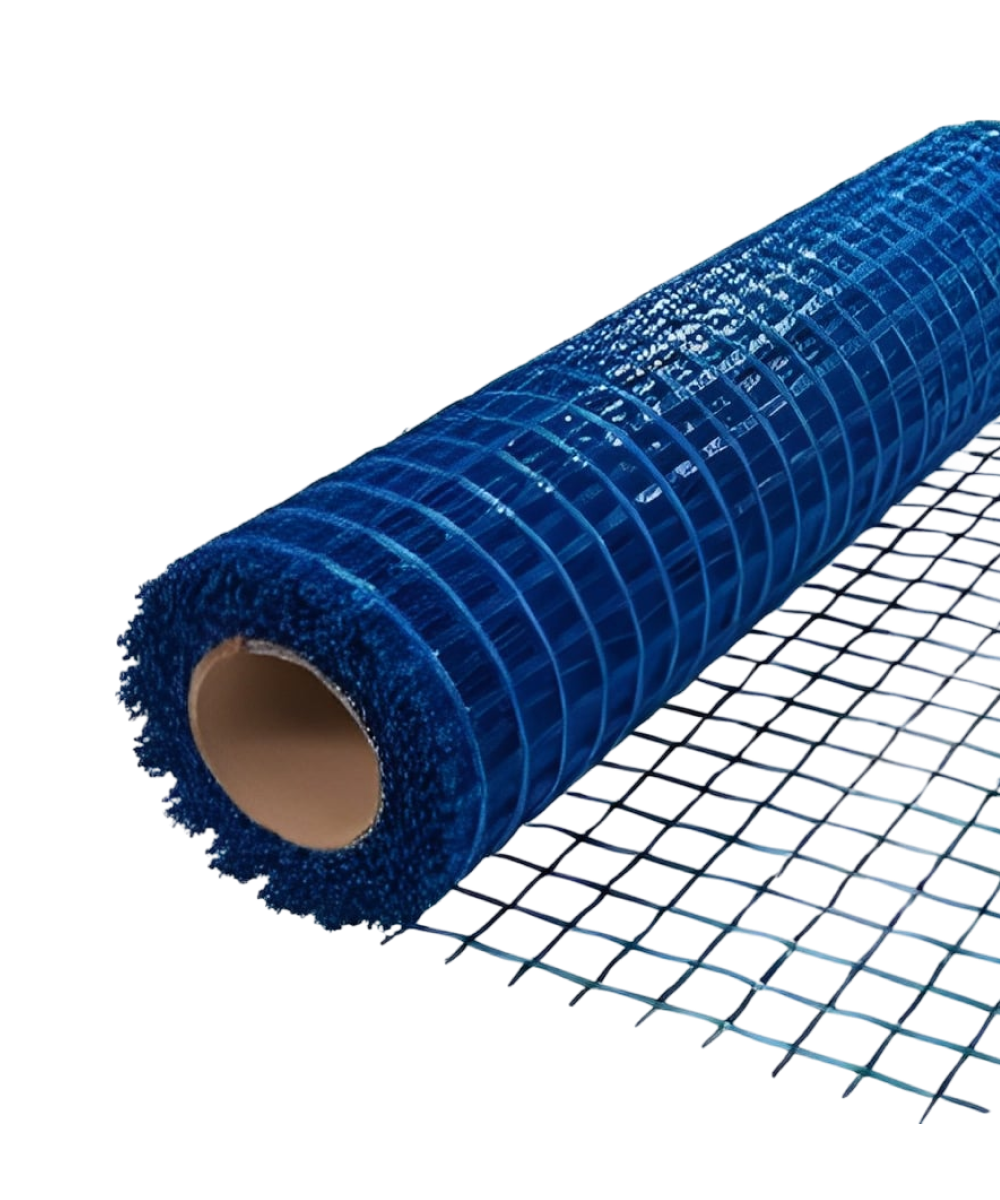
Nets for reinforcing the base layer, reinforcing impact zones, finishing veils and waterproofing nets. Grades and treatments for each application condition.
Nets for reinforcing the base layer, reinforcing impact zones, finishing veils and waterproofing nets.
Grades and treatments for each application condition.
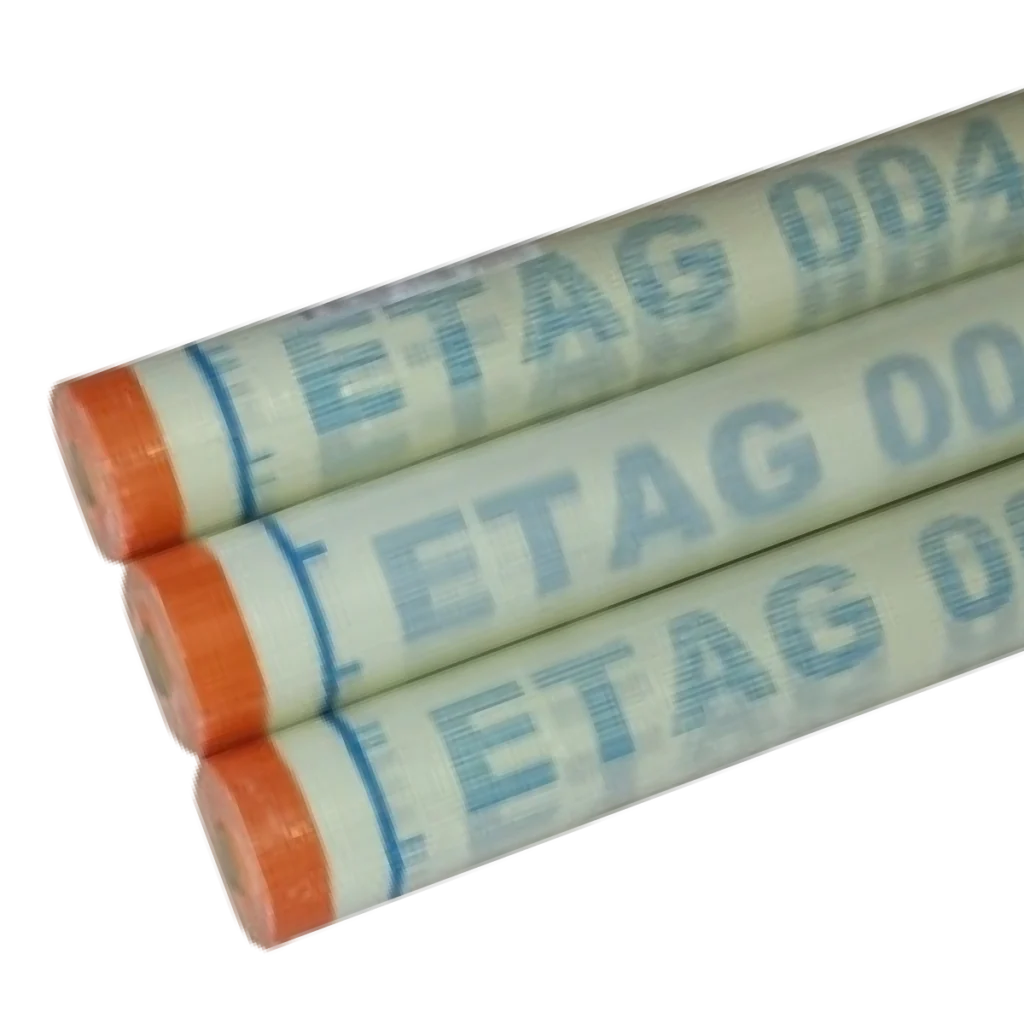
Compliance with EAD 040083-00-0404 and CE marking on all references. Datasheets and catalogue available for download.
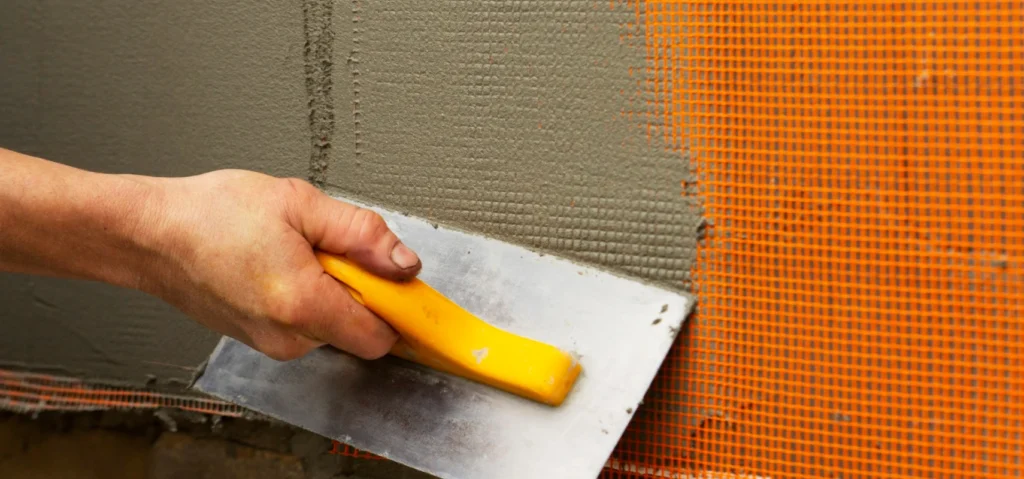
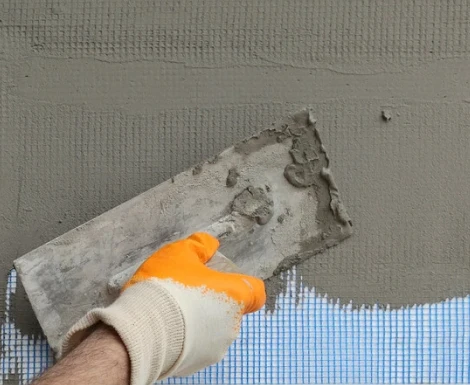
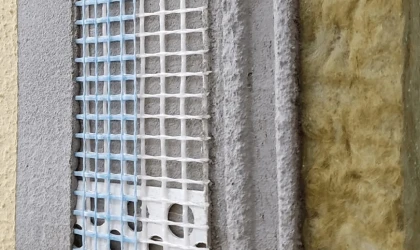
The glass fibre mesh is embedded in the base layer of the ETICS system, between two layers of coating mortar. Its function is to redistribute thermal, mechanical and shrinkage stresses, preventing cracks from spreading to the surface of the cladding.
The mesh must be positioned halfway through the total thickness of the coating mortar, perfectly taut and embedded, without being crushed.
The choice of mesh depends on the area of application in the system. Current mesh for reinforced busbars must be anti-alkali treated and fulfil the requirements of EAD 040083-00-0404: tensile strength after ageing in alkaline solution of not less than 20 N/mm and not less than 50% of the strength in the new state.
The overlap between strips of netting must be at least 10 cm, including the connection with the netting of the finishing and reinforcement profiles. In the basement area (up to 2 metres high), a second reinforcement net is recommended, applied after the base layer has hardened with the first net.
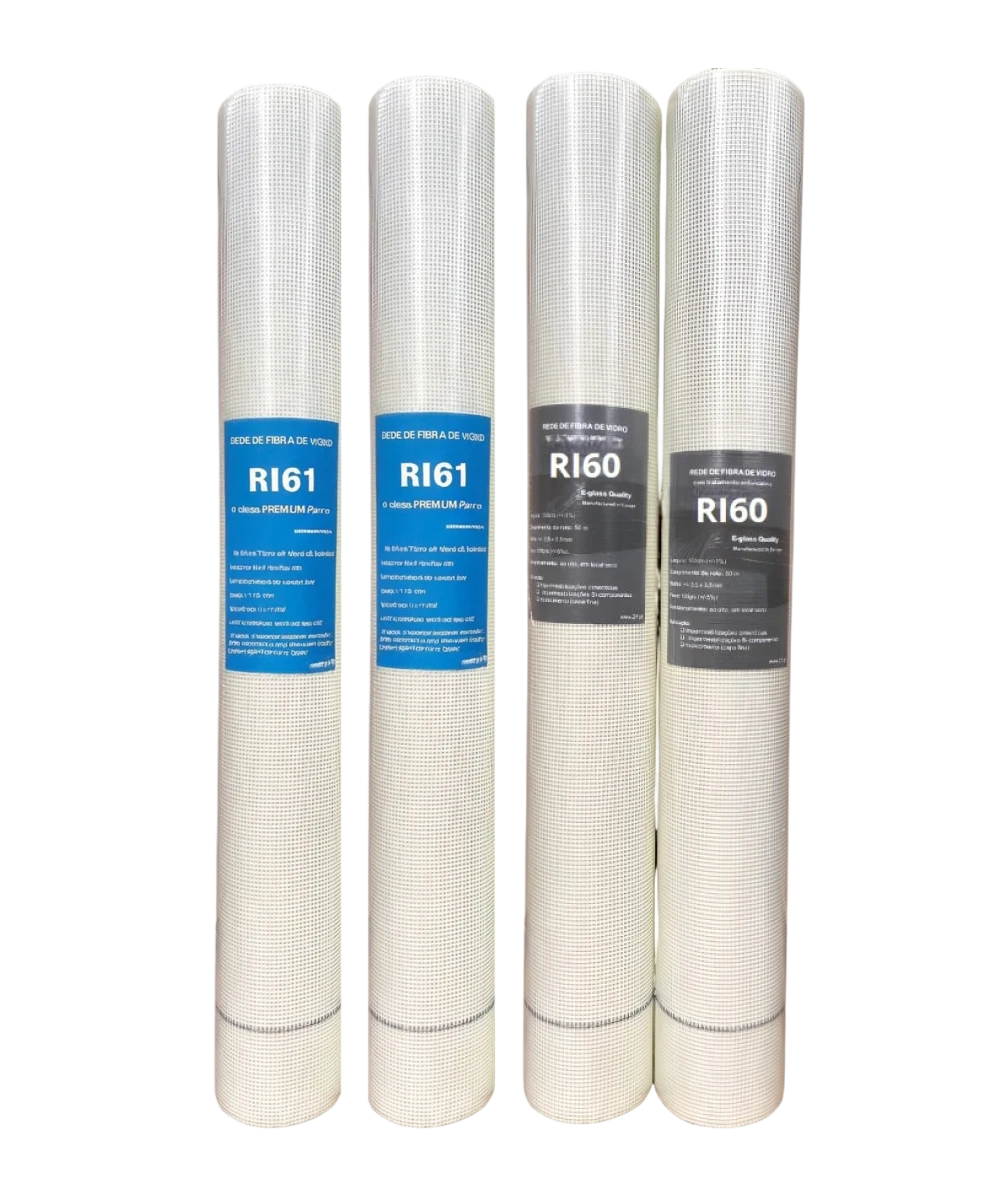
Certified ETICS nets, reinforcement nets for impact zones, finishing veils and waterproofing nets. Anti-alkali treatment on all ETICS references.
Standard specification for reinforced busbar according to EAD 040083-00-0404
Protection against the attack of alkalis present in cement and lime mortars
Fibreglass with double twist Tensile strength and long-term durability
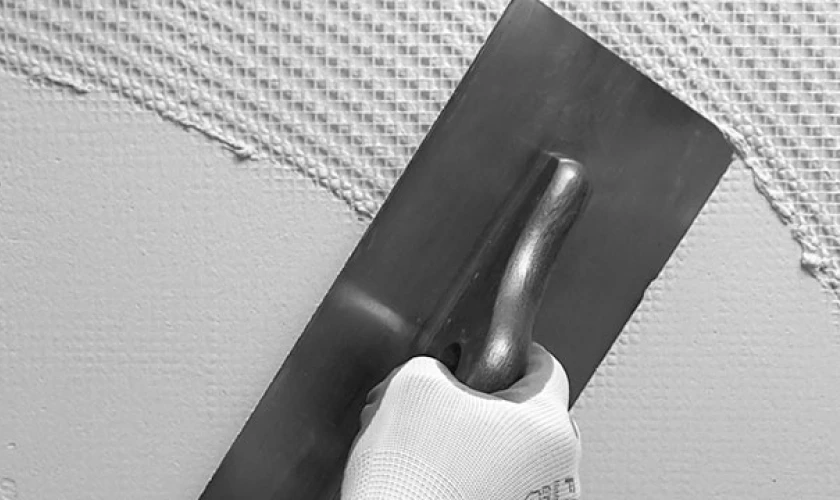
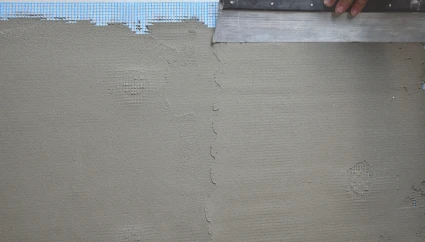
The coating mortar is applied using a stainless steel trowel, in a uniform thickness of approximately 4 mm, in two layers. The first layer is applied with a 50 cm notched trowel (6 mm tooth), achieving a thickness of around 2 mm.
The glass fibre mesh is incorporated freshly over the first layer, stretched and embedded in the mortar. After hardening, the second layer (also 2 mm) is applied, forming a homogeneous surface that completely conceals the mesh.
The 2rf range includes reinforced mesh, reinforcement in impact zones, fine finishing and waterproofing. All ETICS references with certified anti-alkali treatment.
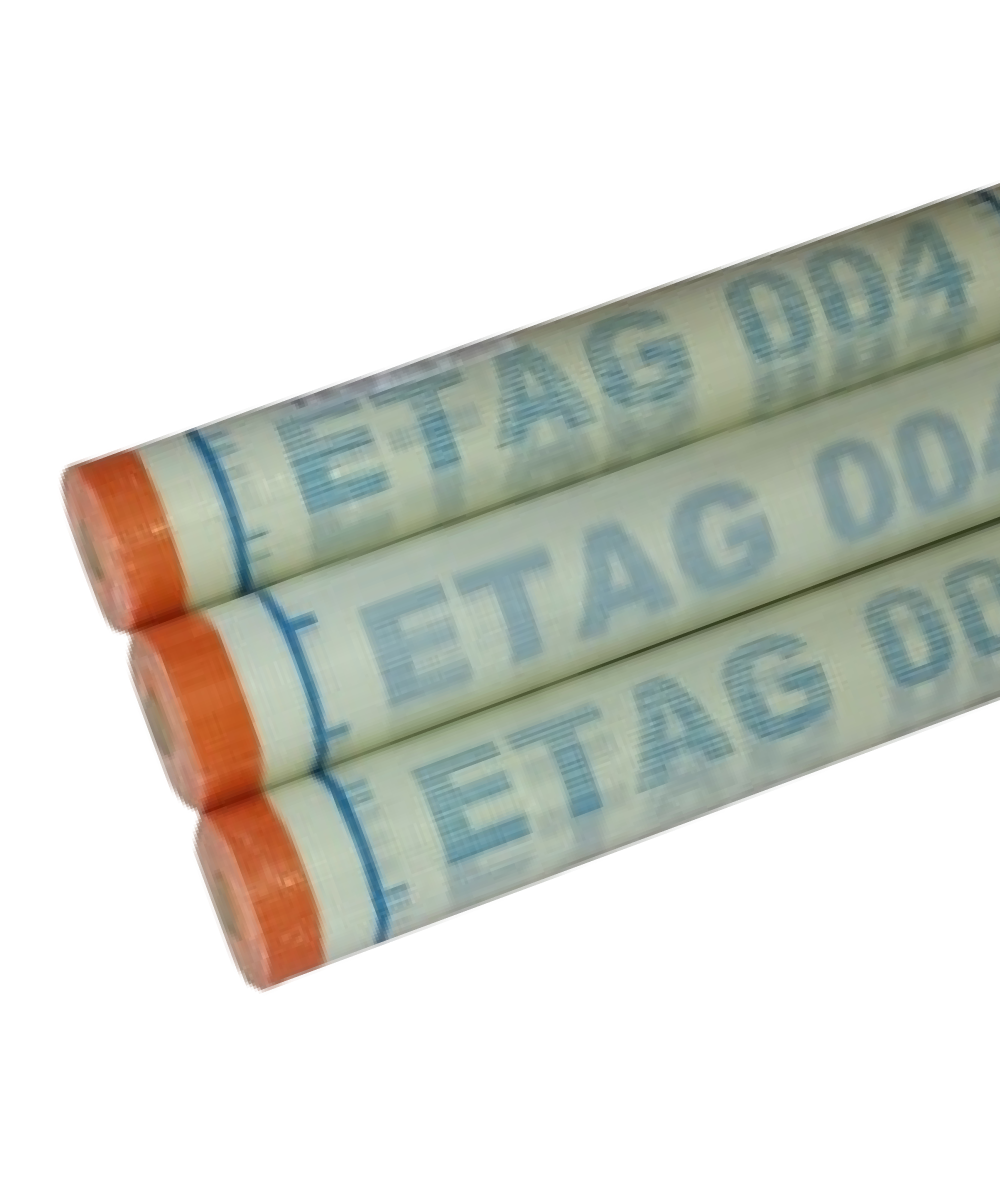
Standard mesh for reinforced bars in external thermal insulation systems.
100% glass fibre yarn with double twist and anti-alkali resin impregnation. 3.6×4.5 mm mesh. Average tensile strength of 1900 N/5 cm in both directions. Elongation of less than 4.5%. In accordance with EAD 040083-00-0404.
Rolls of 1×50 m (50 m²). 2rf references: R.ETICS, RF.PLUS.
Additional frame for areas of greater exposure to mechanical impact.
Fibreglass nets with a grammage of more than 160 g/m². Suitable for the base of the system (up to 2 metres high), façades in passageways and areas exposed to accidental impact. The second net is applied after the base layer has hardened with the first net, without overlapping.
Rolls. Weights and dimensions as per reference.
Reinforcement of finishing layers and thin applications.
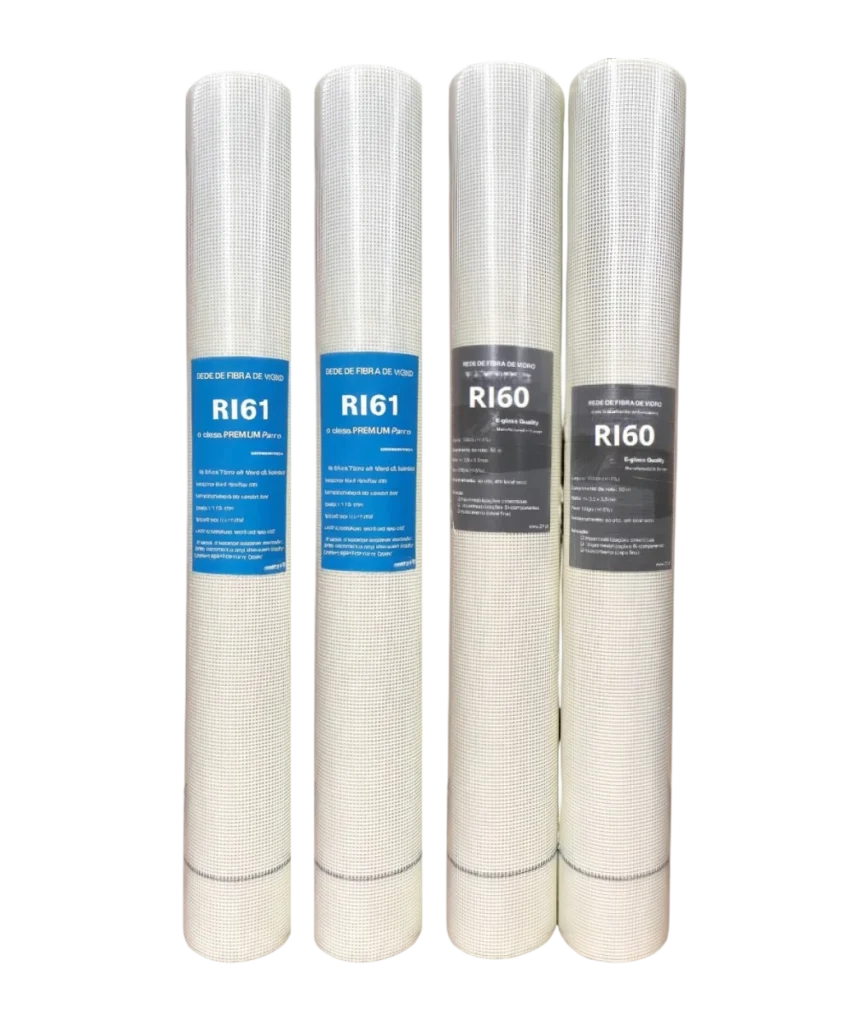
Fibreglass veils with a lower grammage than standard mesh. Used in finishing layers and in situations where the thickness of the coating does not allow the incorporation of 160 g/m² mesh. Compatible with finishing mortars and thin coatings.
Rolls. Weights and dimensions as per reference.
Reinforcement of liquid membranes, rubbers and two-component waterproofing.
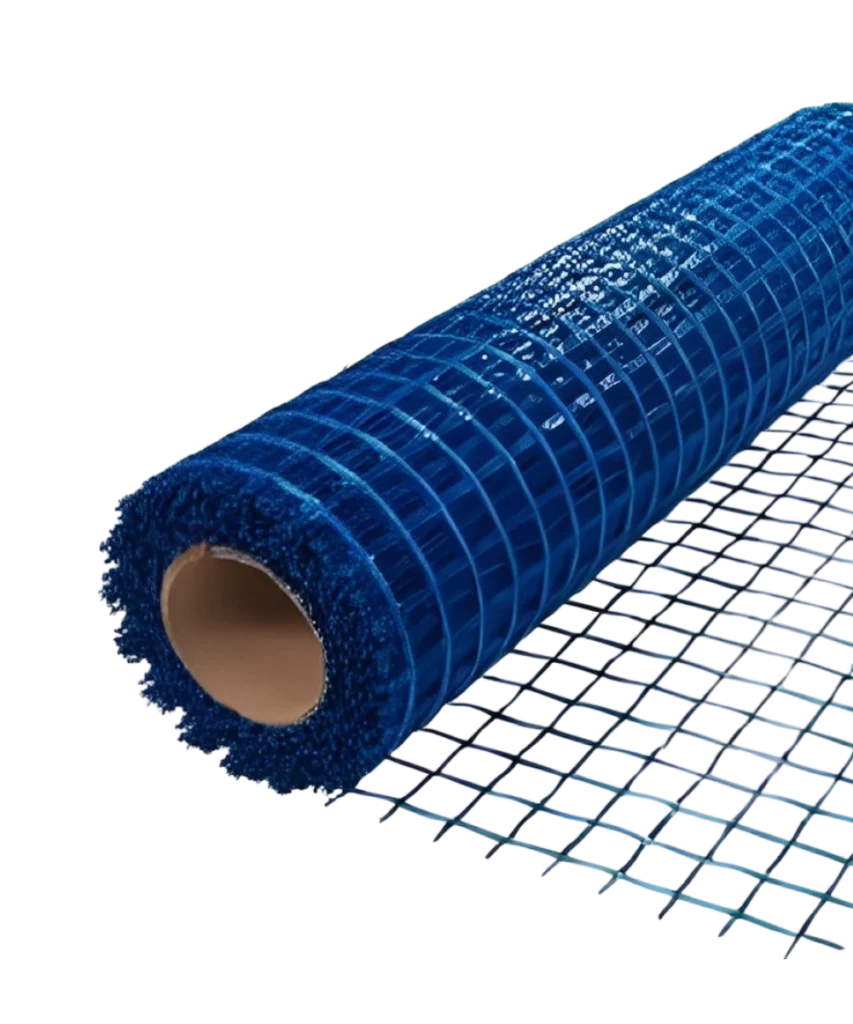
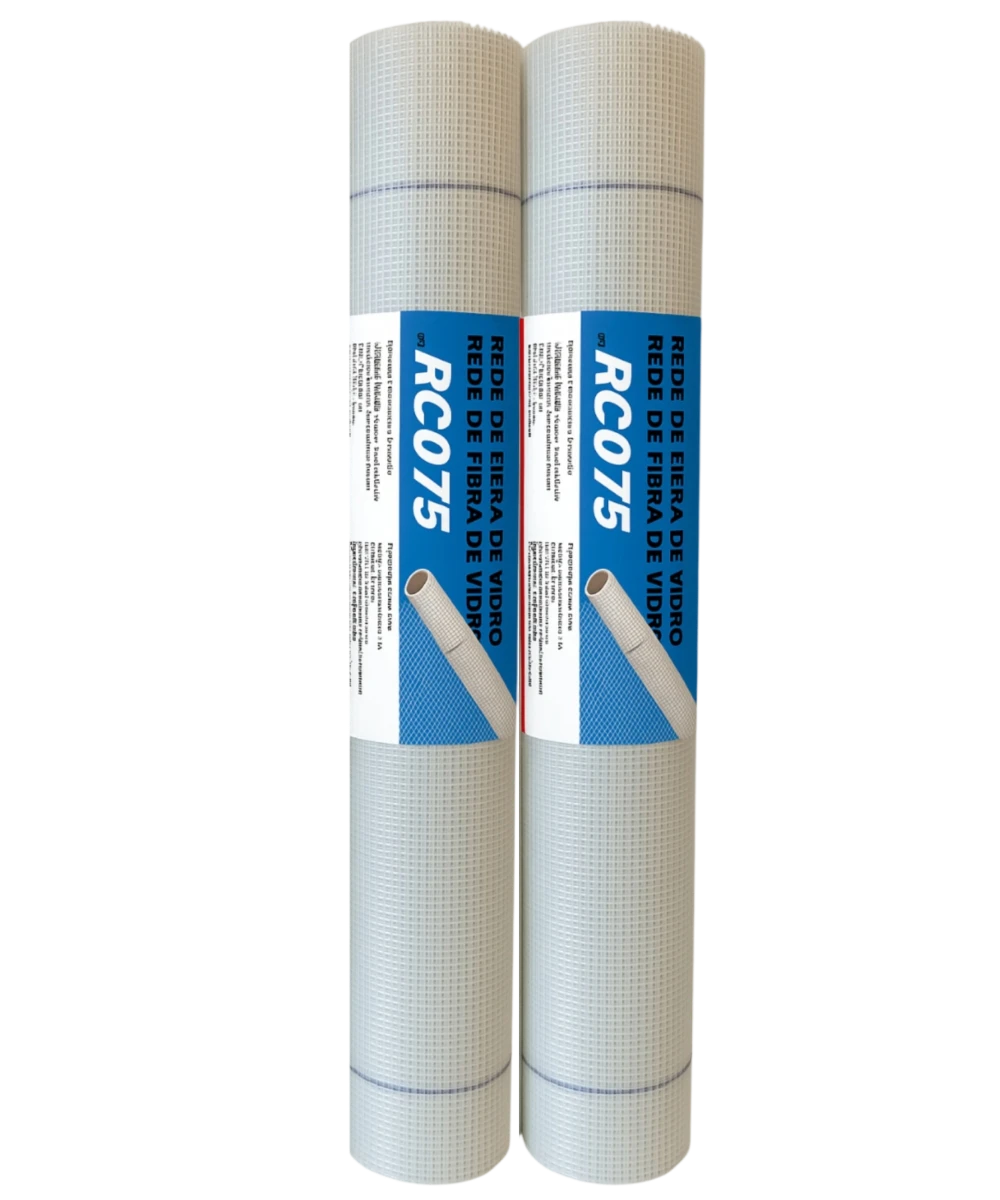
Fine mesh nets (reference RI50) for thicknesses from 1.5 to 3 mm. Applications on balconies, terraces, façade bases and transitions between materials where waterproofing is the main requirement. Compatible with polyurethane and liquid rubber waterproofing systems.
Rolls. Reference 2rf: RI50.
Networks for complementary applications outside the standard ETICS system.
Fibreglass nets for applications in plastering, screeding and other uses where a supporting frame is required. Weights and meshes vary according to the application.
Rolls. Dimensions as per reference.
Standard mesh for reinforced bars in external thermal insulation systems.
100% glass fibre yarn with double twist and anti-alkali resin impregnation. 3.6×4.5 mm mesh. Average tensile strength of 1900 N/5 cm in both directions. Elongation of less than 4.5%. In accordance with EAD 040083-00-0404.
Rolls of 1×50 m (50 m²). 2rf references: R.ETICS, RF.PLUS.
Additional frame for areas of greater exposure to mechanical impact.
Fibreglass nets with a grammage of more than 160 g/m². Suitable for the base of the system (up to 2 metres high), façades in passageways and areas exposed to accidental impact. The second net is applied after the base layer has hardened with the first net, without overlapping.
Rolls. Weights and dimensions as per reference.
Reinforcement of finishing layers and thin applications.
Fibreglass veils with a lower grammage than standard mesh. Used in finishing layers and in situations where the thickness of the coating does not allow the incorporation of 160 g/m² mesh. Compatible with finishing mortars and thin coatings.
Rolls. Weights and dimensions as per reference.
Reinforcement of liquid membranes, rubbers and two-component waterproofing.
Fine mesh nets (reference RI50) for thicknesses from 1.5 to 3 mm. Applications on balconies, terraces, façade bases and transitions between materials where waterproofing is the main requirement. Compatible with polyurethane and liquid rubber waterproofing systems.
Rolls. Reference 2rf: RI50.
Networks for complementary applications outside the standard ETICS system.
Fibreglass nets for applications in plastering, screeding and other uses where a supporting frame is required. Weights and meshes vary according to the application.
Rolls. Dimensions as per reference.

Standard 160 g/m² mesh embedded in the first layer of mortar. Minimum overlap of 10 cm between strips. Total thickness of the reinforced layer: 4 mm (2 mm + mesh + 2 mm). The mesh should be in the middle of the total thickness.

Second reinforcement mesh applied after the base layer has hardened with the first mesh. Basement area typically up to 2 metres high. Do not overlap the second net with the first.

Diagonal reinforcement of 200×300 mm at 45° at the corners of windows and doors, applied to the support before the reinforced bar. Pre-moulded nets can be used.
Networks set up the system's base layer.
These components ensure protection, fixation and watertightness.
The standard grammage for reinforced busbars is 160 g/m² (±8%), in accordance with EAD specification 040083-00-0404. Higher grammages are used as additional reinforcement, not as a substitute for standard mesh.
Impregnation of the mesh with resins that protect it from chemical attack by the alkalis present in cement and lime mortars. Without this treatment, the glass fibre degrades in contact with the mortar. The tensile strength after ageing in an alkaline solution should not be less than 20 N/mm.
Minimum overlap of 10 cm between strips of mesh, including the connection with the mesh of the finishing and reinforcement profiles.
Double reinforcement in the basement area (up to 2 metres high) is recommended due to the greater exposure to impacts. The second reinforcement mesh is applied after the base layer has hardened with the first mesh, without overlapping.
The nets fulfil the requirements of EAD 040083-00-0404 and are compatible with ETICS systems currently on the Portuguese market. We recommend checking the system owner's specifications.
The 2rfpro.pt online shop offers a complete catalogue of profiles, bushes, nets and accessories, with detailed technical information and delivery within 24 hours. For larger projects or specific technical specifications, the sales team is available for dedicated support.
Adding {{itemName}} to cart
Added {{itemName}} to cart