Quinta de Santo Estevão,
Rua da Gândara, Abraveses
3515-149 - Viseu
Tel: 232 459 087
(call to national fixed network)
Mechanical fixing to complement the gluing of the insulation. Plastic and steel nail anchors, telescopic and special, selected by type of support and insulation thickness.
ETAG 004 compliance and CE marking on all references. Datasheets and catalogue available for download.
Mechanical fixing with dowels is additional to gluing, never an alternative. The dowels are applied after the bonding mortar has hardened, guaranteeing the long-term stability of the insulation. They must fulfil the requirements of ETAG 014.
The choice of fixings depends on the substrate and the insulating board. In the case of perimeter bonding with dots, the mechanical fixing must coincide with areas where there is bonding mortar on the board.
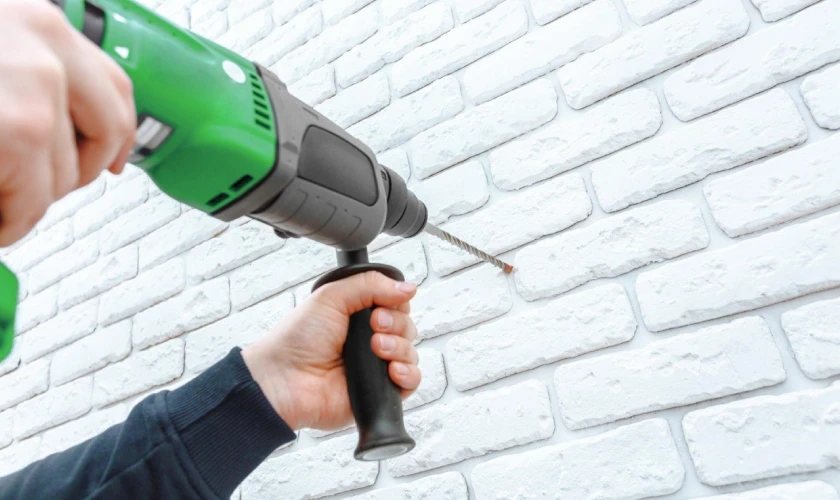
The dowels are distributed around the perimeter of the board and in the centre, in a quantity of 6 to 8 per m². The length of the dowel must be at least 3 cm greater than the thickness of the insulating board. Drilling is carried out by the percussion method in concrete and solid brick substrates, and by the normal method in perforated brick substrates.
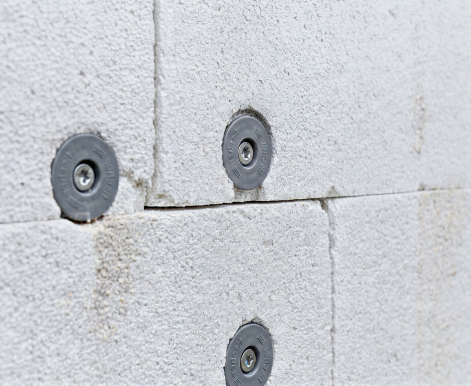
The bushes must be embedded in the panel. Any that become damaged or loose should be removed and replaced in a new hole, covering the remainder with insulating material or foam.
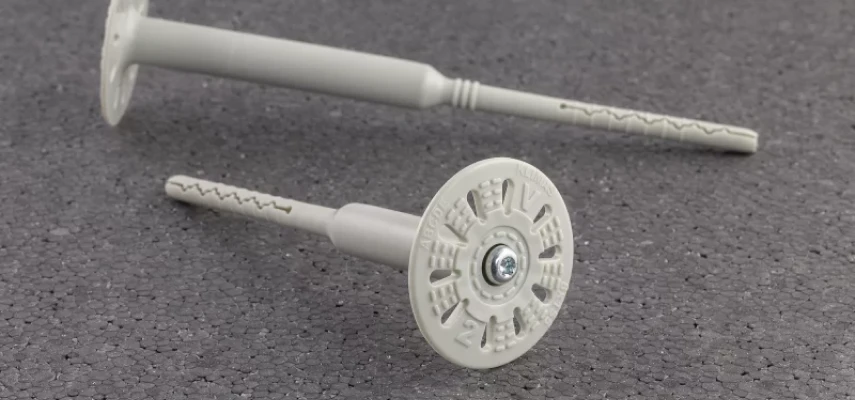
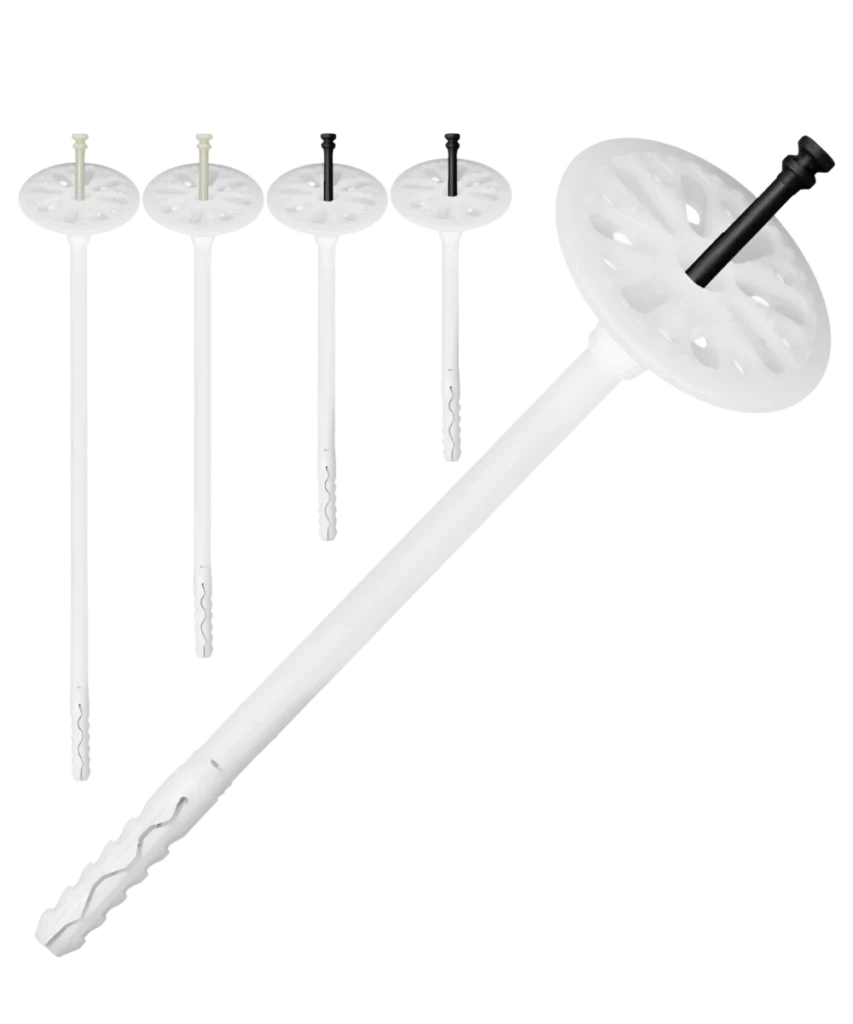
Plastic and steel nail bushes, telescopic and special. Selection by support category in accordance with ETAG 014. Lengths from 70 to 430 mm.
Adapted to the support depending on the insulator and its thickness
Selection by load requirement and exposure condition
Covering insulation thicknesses from 20 to 400 mm
The dowels are applied after the bonding mortar has set. Drilling is done by the hammer method in concrete and solid brick substrates, and by the normal method in perforated brick substrates. The screw is hammered or screwed in depending on the type of dowel.
The length of the dowel must be at least 3 cm greater than the thickness of the board. The dowels must be embedded in the insulating panel. Distribution of 6 to 8 dowels per m², in a T (EPS, ICB, XPS) or W (mineral wool) layout.
The 2rf range includes dowels for all types of support used in Portuguese construction: concrete, solid brick, perforated brick, blocks and aerated concrete.
Standard mechanical fixing for ETICS systems on standard substrates.
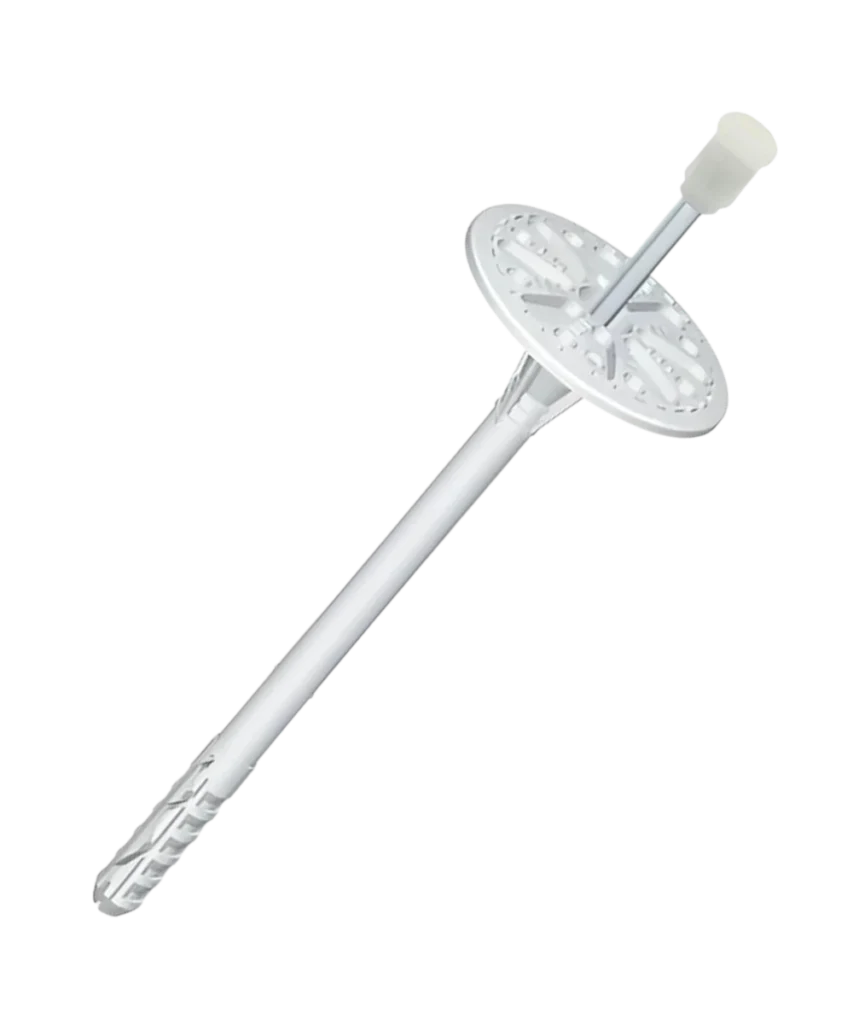
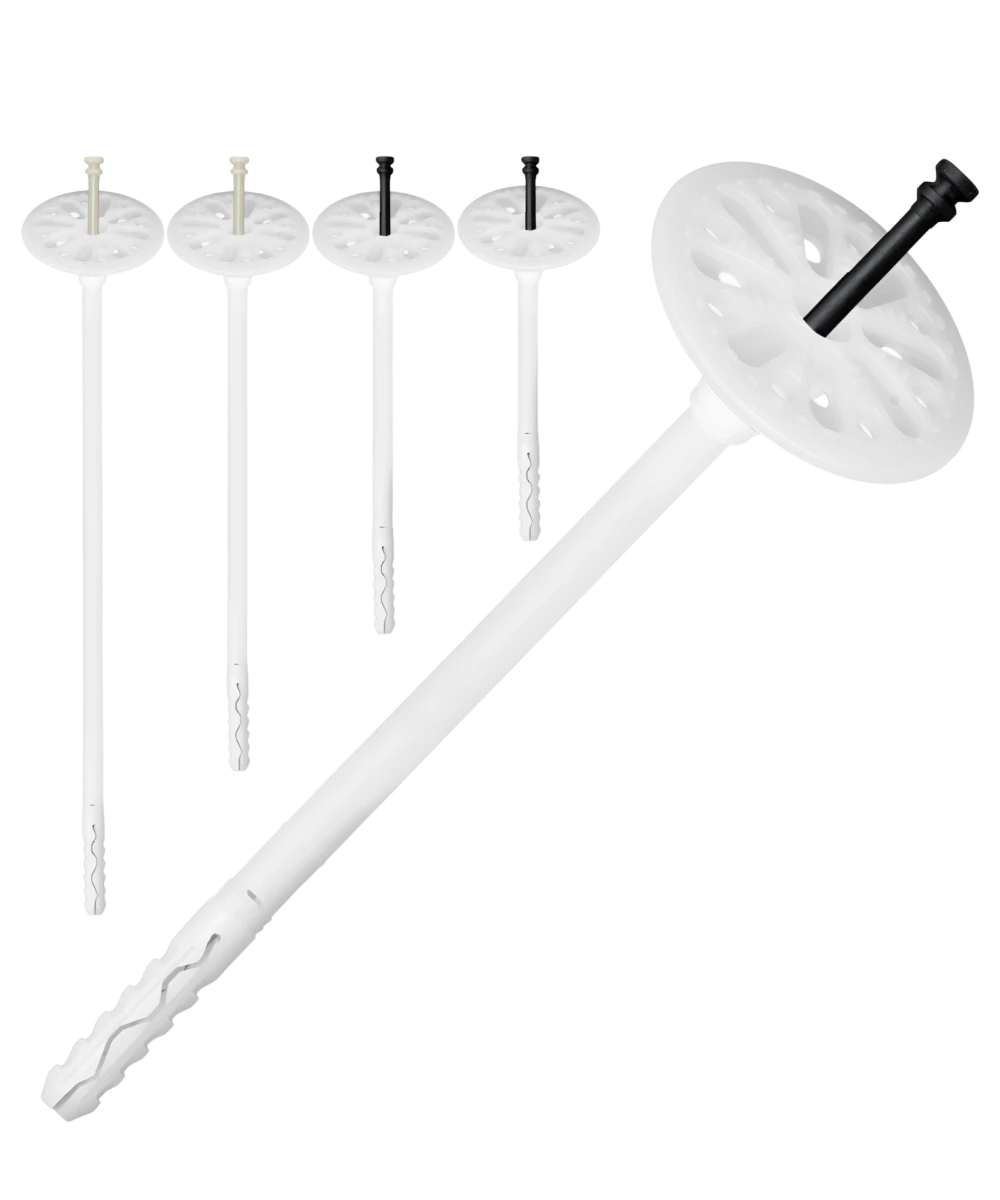
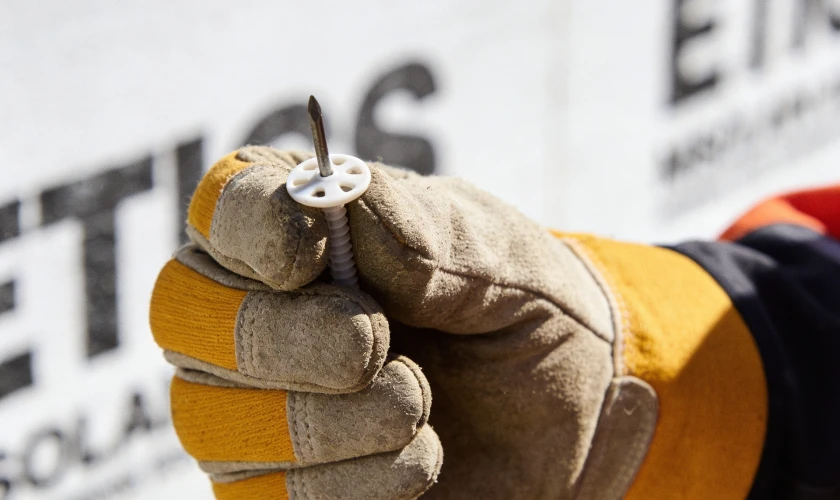
Plastic body and reinforced polymer nail. Eliminates thermal bridging at the fixing point. Application by percussion. Suitable for concrete, solid brick and perforated brick substrates under normal exposure conditions.
Available in lengths from 70 to 260 mm. Boxes of 200 and 250 units.
The most demanding fixings for high-rise buildings, coastal areas and mineral wool systems.
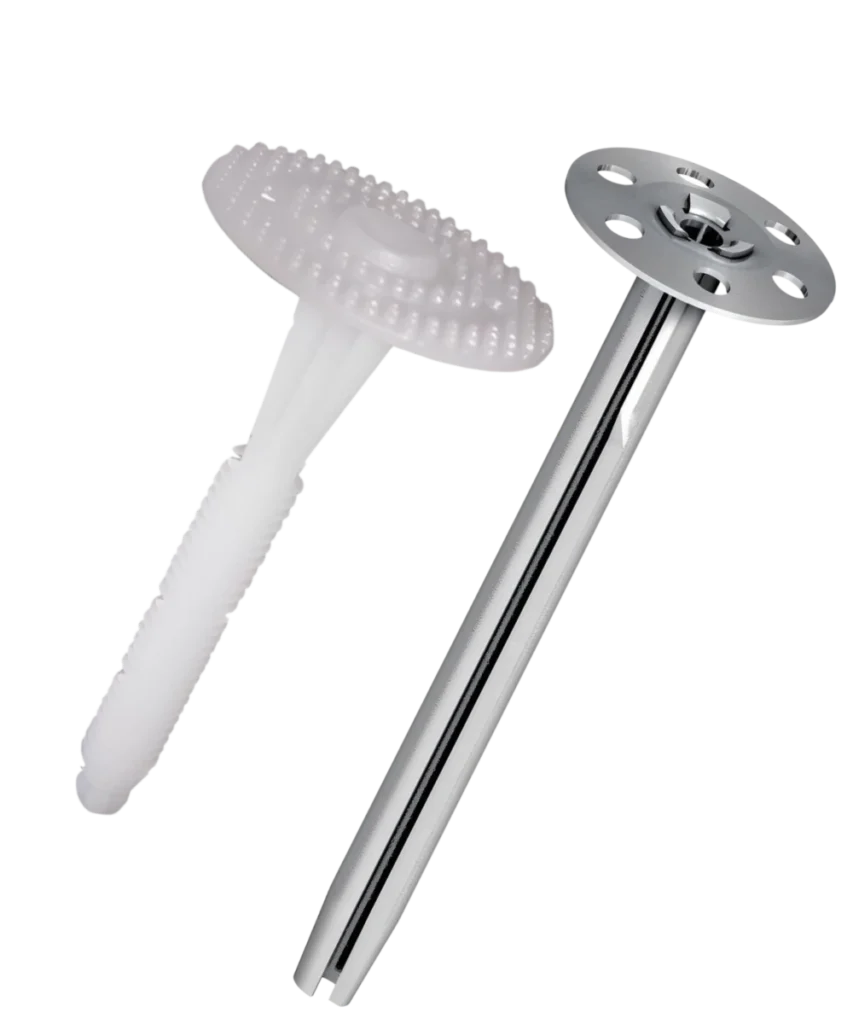
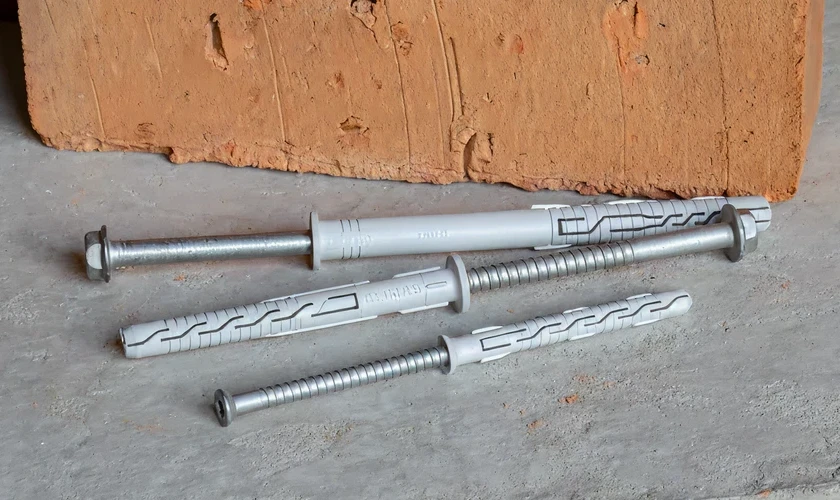
Galvanised or stainless steel nails. Higher pull-out resistance than plastic nails. Suitable for buildings over 8 metres, high wind areas, substrates with less anchoring capacity and systems with mineral wool insulation. In the event of a fire, the steel nail keeps the boards fixed to the substrate even when the bonding mortar loses its capacity.
Available in the same lengths as the plastic nail versions. Boxes of 200 units.
Bushing body for combining with specific nails as required by the project.
It allows the body of the dowel and the type of nail (plastic or steel) to be selected separately depending on the substrate and exposure conditions. Suitable for projects with specific specifications or when it is necessary to adapt the nail to the substrate after checking it on site.
Available in various lengths. Nails sold separately.
Fixing solutions for supports and conditions that standard bushes do not cover.
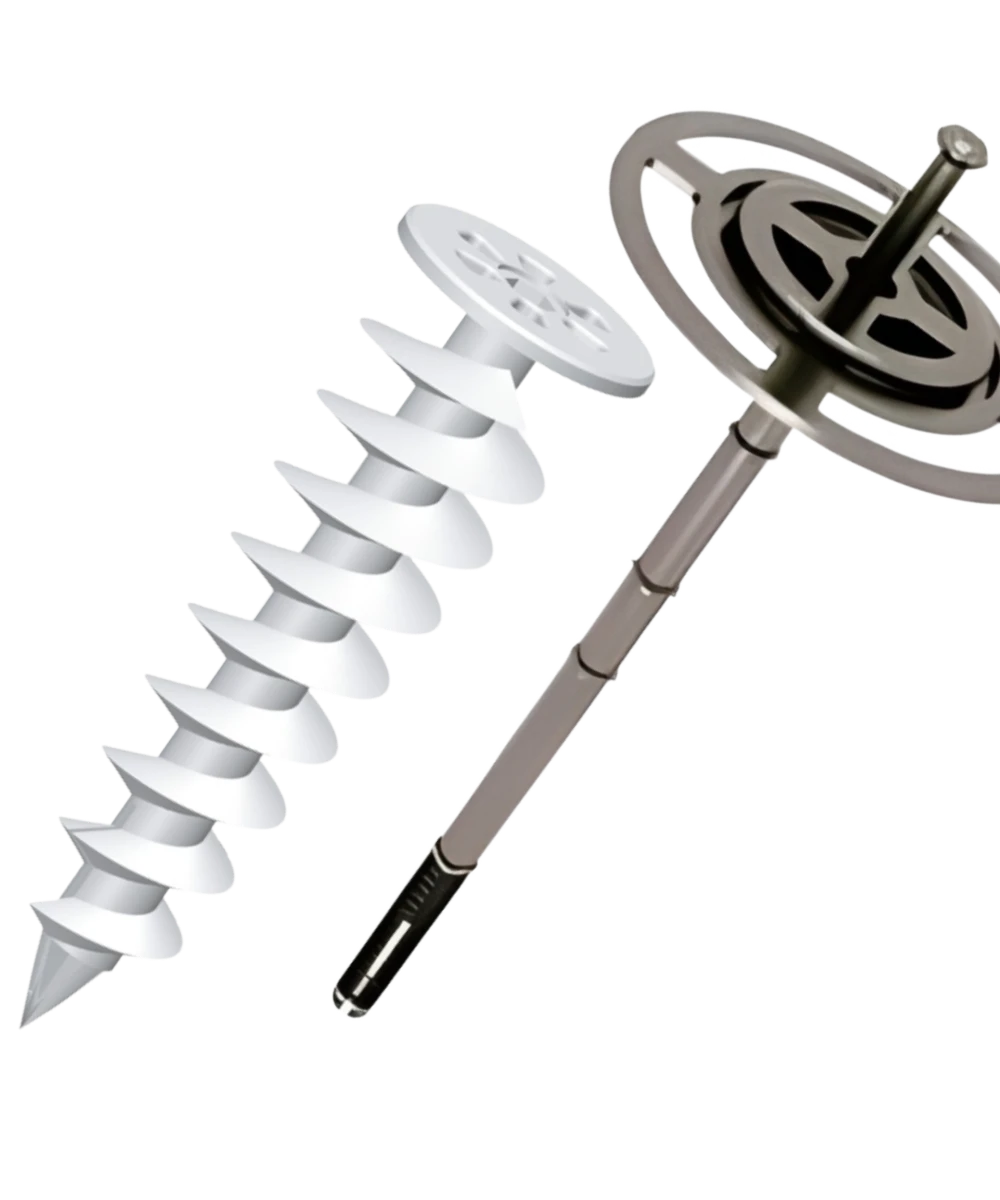
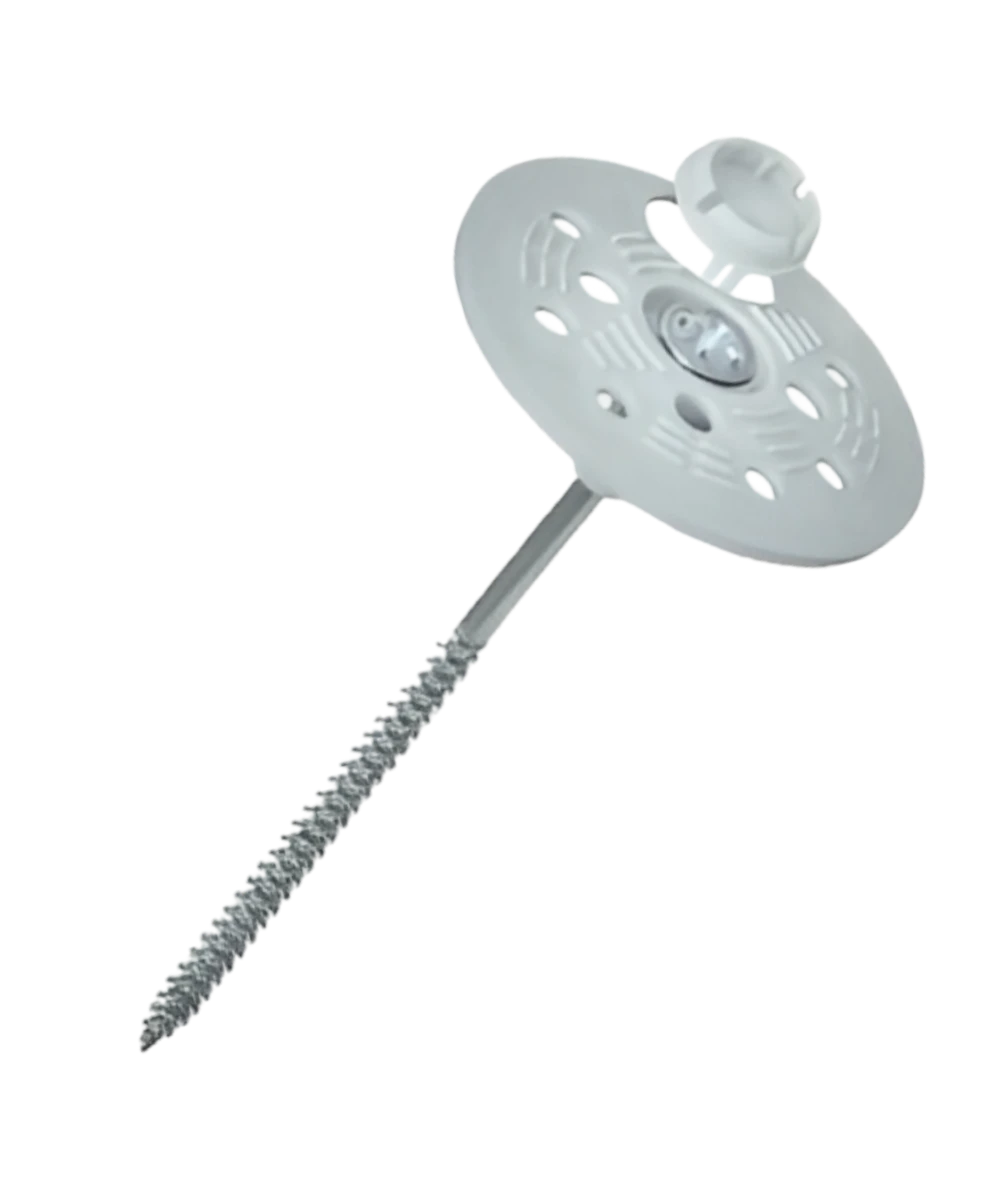
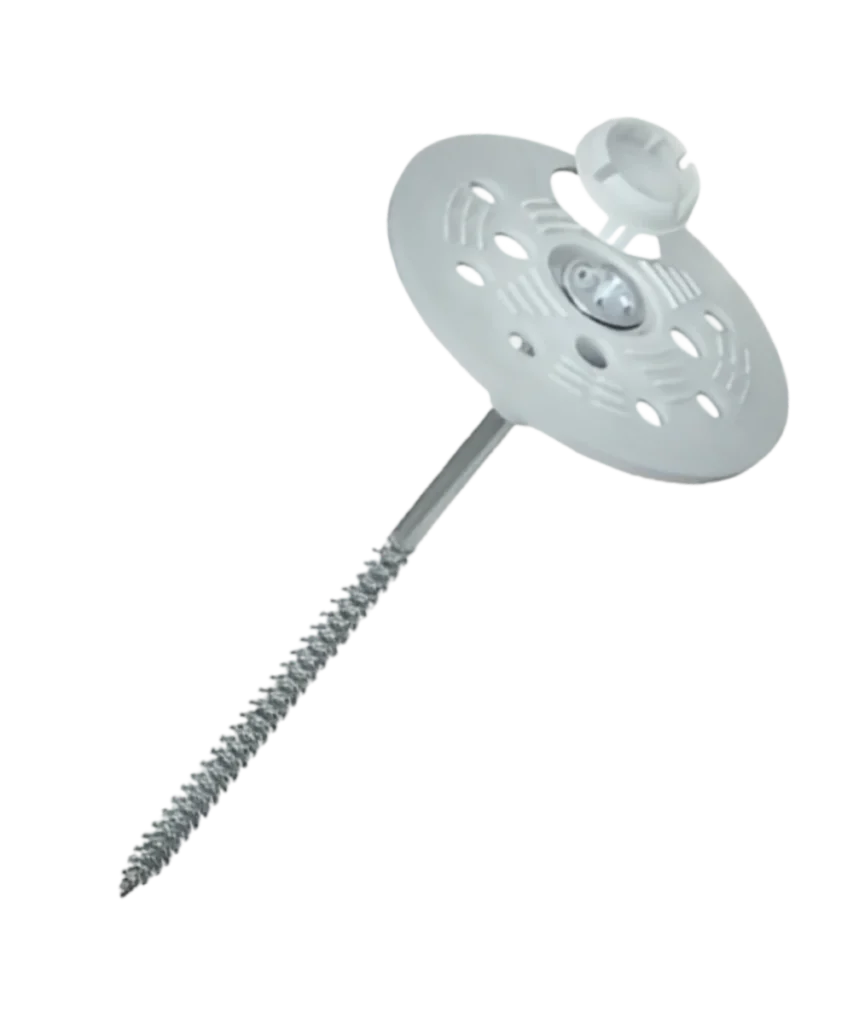
Fixing to wooden supports with a screw nail and mineral wool disc to eliminate thermal bridging. Fixing with chemical glue for high loads. Repair dowels for interventions in existing ETICS systems where the original holes are no longer usable.
Sold by the unit. Dimensions and configurations as per reference.
Caps and discs for concealing the fixing point on the insulation surface.
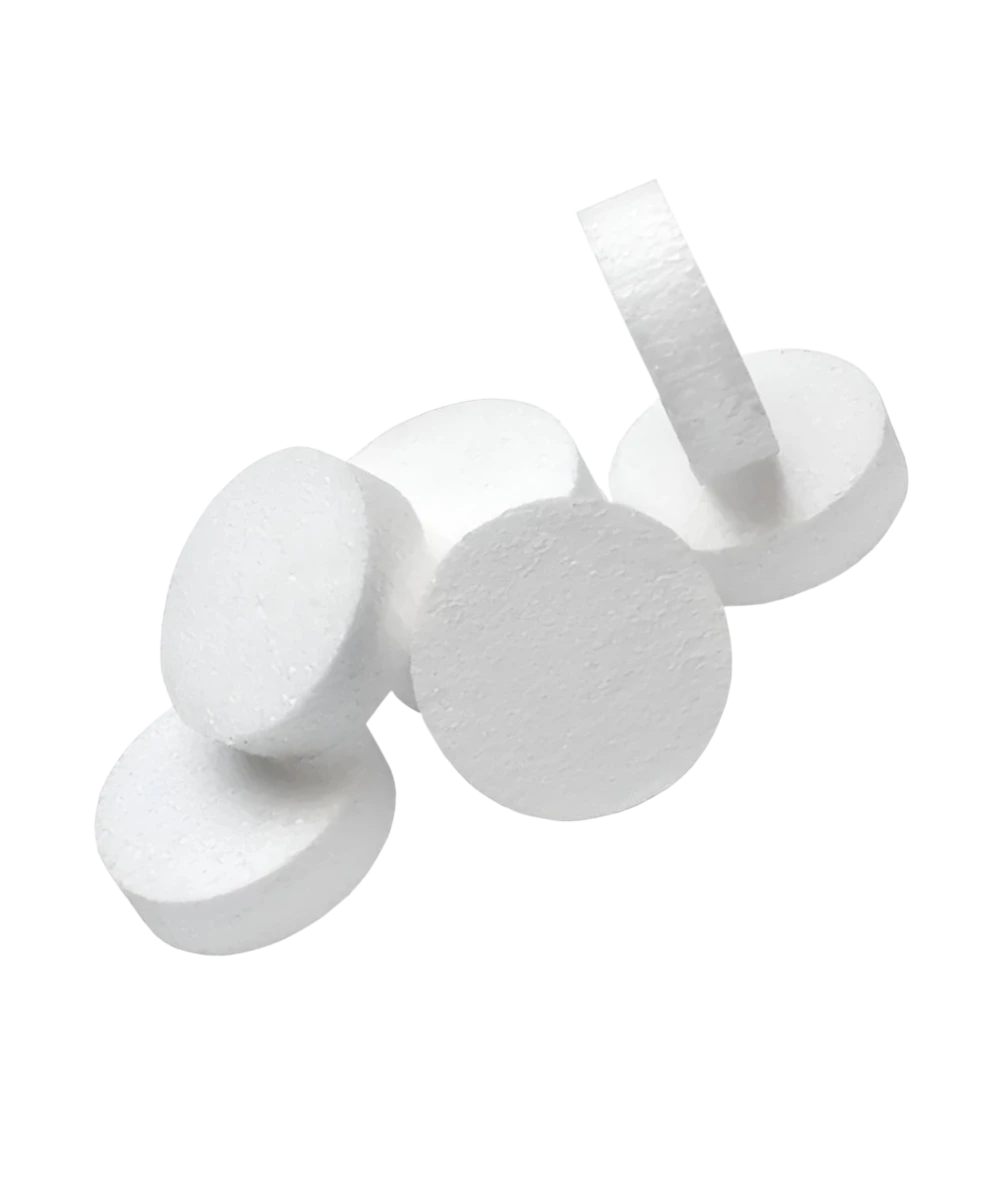
They eliminate the irregularity created by the head of the dowel before the reinforced busbar. Concealment ensures a uniform surface for the insulation, preventing visible marks on the final finish. Available in EPS and in versions compatible with current head diameters.
Complete fixing kits for specific applications.
Pre-configured sets with dowel, nail and accessories for defined application situations. They simplify selection and guarantee compatibility between components.
Standard mechanical fixing for ETICS systems on standard substrates.
Plastic body and reinforced polymer nail. Eliminates thermal bridging at the fixing point. Application by percussion. Suitable for concrete, solid brick and perforated brick substrates under normal exposure conditions.
Available in lengths from 70 to 260 mm. Boxes of 200 and 250 units.
The most demanding fixings for high-rise buildings, coastal areas and mineral wool systems.
Galvanised or stainless steel nails. Higher pull-out resistance than plastic nails. Suitable for buildings over 8 metres, high wind areas, substrates with less anchoring capacity and systems with mineral wool insulation. In the event of a fire, the steel nail keeps the boards fixed to the substrate even when the bonding mortar loses its capacity.
Bushing body for combining with specific nails as required by the project.
It allows the body of the dowel and the type of nail (plastic or steel) to be selected separately depending on the substrate and exposure conditions. Suitable for projects with specific specifications or when it is necessary to adapt the nail to the substrate after checking it on site.
Available in various lengths. Nails sold separately.
Fixing solutions for supports and conditions that standard bushes do not cover.
Fixing to wooden supports with a screw nail and mineral wool disc to eliminate thermal bridging. Fixing with chemical glue for high loads. Repair dowels for interventions in existing ETICS systems where the original holes are no longer usable.
Sold by the unit. Dimensions and configurations as per reference.
Caps and discs for concealing the fixing point on the insulation surface.
They eliminate the irregularity created by the head of the dowel before the reinforced busbar. Concealment ensures a uniform surface for the insulation, preventing visible marks on the final finish. Available in EPS and in versions compatible with current head diameters.
Complete fixing kits for specific applications.
Pre-configured sets with dowel, nail and accessories for defined application situations. They simplify selection and guarantee compatibility between components.

Drilling by percussion method (hammer). Length of dowel: thickness of insulation + minimum 3 cm of anchorage in the support. Distribution: 6 to 8 dowels/m² in a T-shape.

Drilling by normal method (without percussion). The internal geometry of the brick affects the anchorage. Validation of the load capacity is recommended. Distribution: 6 to 8 dowels/m².

W-shaped distribution: 3 dowels per board, applied 5-10 cm from the sides of the board. Steel nails recommended for fire safety reasons.
The dowels secure the insulation to the support.
These components ensure protection, reinforcement and watertightness.
Mechanical fixing is additional to gluing, never an alternative. According to ETAG 014, its application depends on the conditions of the support, the height of the building and exposure to wind.
The length of the dowel must be at least 3 cm greater than the thickness of the insulating board, according to the procedure described in the ETICS Manual.
The plastic nail eliminates thermal bridging at the fixing point and is suitable for most everyday situations. The steel nail offers greater pull-out resistance and is suitable for high-rise buildings, high-wind areas, supports with lower anchoring capacity and mineral wool systems.
The standard quantity is 6 to 8 bushes/m². The number depends on the pull-out resistance, the type of insulating board, the height and position of the building. Reinforcement may be necessary in peripheral areas of the façade.
T-shaped layout for EPS, ICB and XPS boards: dowels at all board intersections and one in the centre. W-shaped layout for mineral wool: 3 dowels per board 5-10 cm from the sides.
The 2rfpro.pt online shop offers a complete catalogue of profiles, bushes, nets and accessories, with detailed technical information and delivery within 24 hours. For larger projects or specific technical specifications, the sales team is available for dedicated support.
Adding {{itemName}} to cart
Added {{itemName}} to cart